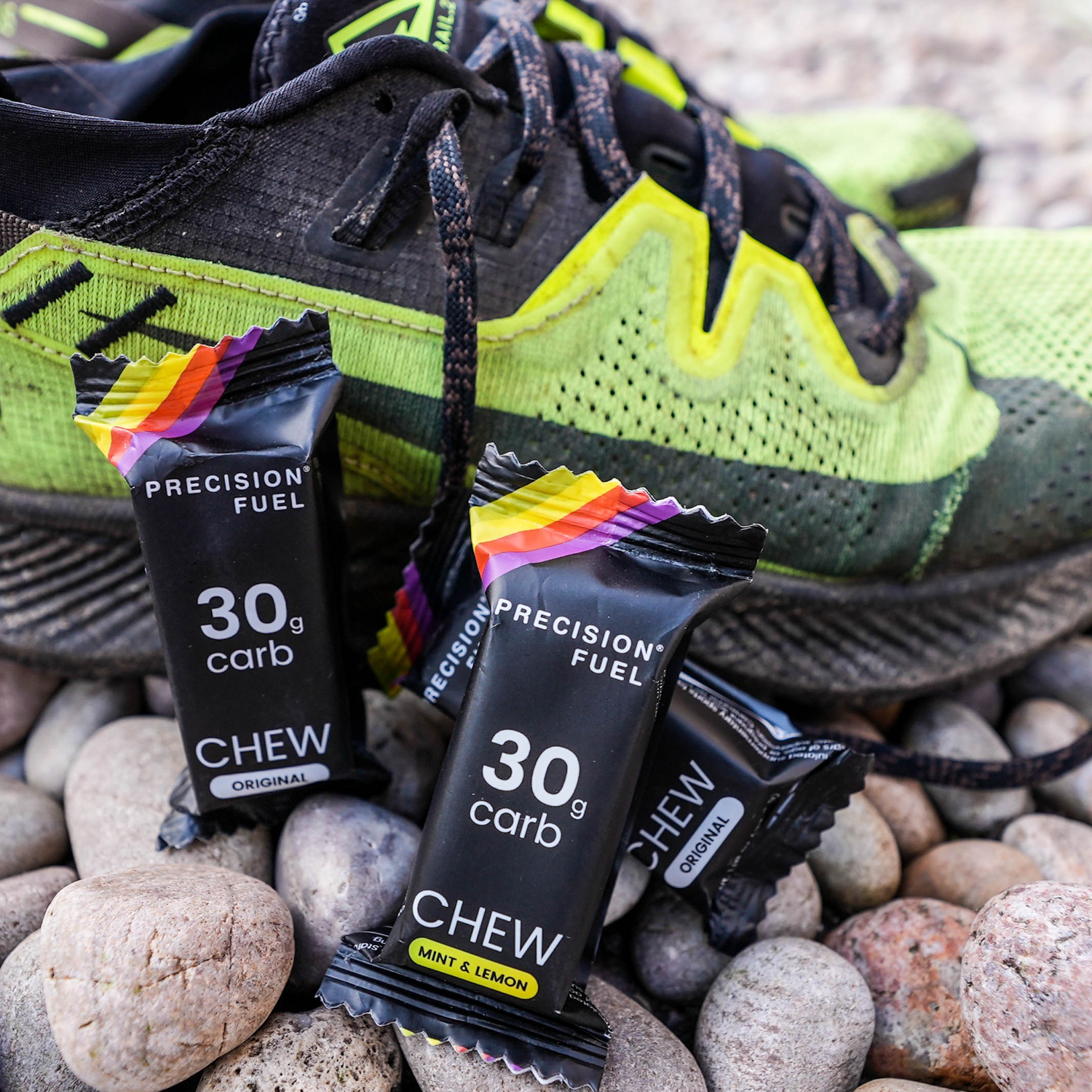
From trial and error to precision, this episode unpacks why knowing how salty a sweater you are can unlock better fueling, hydration, and performance.
Episode Description:
Most runners know when their legs are tired, when their heart rate is higher than they'd like, and when their watch disagrees with reality, but far fewer know what’s actually happening in their sweat. And yet, hidden in those grains of salt is a story about performance, cramping, gut trouble, bonking, and why two athletes with identical race fuel and hydration plans can do the same race with wildly different outcomes.
In this episode of Legwork, Matt and Molly talk with Andy Blow — endurance athlete, sports scientist, and founder of Precision Fuel & Hydration, to explore the messy, fascinating world of electrolytes.
From Andy’s own battles with hypernatremia to the science behind sweat testing, the conversation pulls apart the myths, marketing, and misunderstandings that keep athletes guessing. It’s a journey from personal experiment to practical insight, showing how something as simple as knowing your sweat composition can reshape your entire fueling strategy and help you be a more informed athlete.
Whether your kit dries white after every run or leaves almost nothing behind, this episode helps you understand why it matters and how your electrolyte losses can guide smarter fueling and hydration.
They cover:
- Andy’s winding path from triathlon to sports science to founding Precision Fuel & Hydration
- Why two athletes can lose tenfold different amounts of sodium — and why that matters
- How sweat testing works, what it reveals, and why most athletes only need to do it once
- The “t-shirt sizing” analogy for understanding your own sweat salinity
- How electrolytes influence fuel absorption, cramps, GI distress, and race-day performance
- The philosophy behind separating fuel from hydration — and why combination products aren’t always ideal
- Real-world examples of hydration strategies, from short runs to Western States-level heat
- What 2:1 vs. 1:0.8 carb ratios actually mean, and when those differences matter
- The differences between hypotonic, isotonic, and hypertonic drinks
- Why marketing oversimplifies hydration — and how to navigate the noise
- Research connecting sweat composition to bone mineral density
- Finding a healthy relationship with data, wearables, and metrics
- Future innovations in sports nutrition — from packaging to apparel to carrying fuel more comfortably
Whether you're training for your first 10K or trying to solve the mystery of mid-race cramps, this episode helps you understand your physiology — and build a hydration strategy that actually fits.
Chapter List:
00:00 Introduction to Precision Fuel and Hydration
03:09 Andy's Personal and Professional Career Path
05:41 Andy Blow's Athletic Journey and Founding Story
06:26 The Science Behind Sweat Testing and Electrolyte Needs
09:26 Growth and Evolution of Precision Fuel and Hydration
12:38 The Impact of COVID-19 on Business Strategy
16:11 Philosophy of Separation in Fuel and Hydration Products And the Myth That None of It Matters
20:56 The Role of Electrolytes in Performance
23:53 Insights from Formula 1 Experience
26:51 The Importance of Sweat Testing for Athletes
27:13 Getting Into The Science Of It All, T-Shirt Sizing The Salinity Of Your Sweat And The Case For Seeking Out That Information
37:38 Hydration Strategies for Athletes
42:35 Understanding Carbohydrate Ratios in Fueling
50:13 The Science of Osmolality in Sports Drinks
53:57 Evolving Beliefs in Sports Nutrition
59:01 Andy's Research on Sweat Salinity and Bone Health
01:03:37 The Role of Data in Athletic Performance
01:08:37 Future Innovations in Sports Nutrition and Gear
Detailed Show Notes:
00:00 — Introduction to Precision Fuel & Hydration
- Matt and Molly introduce Andy Blow, founder of Precision Fuel & Hydration, and set the stage for a conversation about individualized fueling.
- Overview of PF&H as both a brand carried in the Bakline shop and a system the hosts personally rely on in their own training.
- Framing of the episode: exploring science, founder story, and practical strategies around hydration and electrolytes.
03:09 — Andy’s Personal and Professional Career Path
- Andy describes his early athletic life in the UK, transitioning from soccer to endurance sports after discovering he performed better without a ball.
- His academic path in sports and exercise science, which opened doors into elite training environments.
- First exposure to triathlon and the spark that pushed him deeper into endurance training.
05:41 — Andy Blow’s Athletic Journey and Founding Story
- Andy details his progression to competing as a junior and senior triathlete.
- His personal struggles with hypernatremia during Ironman races, which became the catalyst for exploring electrolyte needs.
- Early realization that his performance problems were tied to sodium loss, and that few athletes understood or talked about it at the time.
06:26 — The Science Behind Sweat Testing and Electrolyte Needs
- Andy explains receiving a cystic fibrosis sweat test to quantify his sodium losses which revealed levels “off the charts.”
- Introduction to the massive variability in sweat sodium concentration between individuals.
- Understanding sweat composition becomes the first building block of what would later become Precision Hydration.
09:26 — Growth and Evolution of Precision Fuel & Hydration
- The company’s early years focused on professional sports teams (including the New York Knicks).
- PF&H began as “the business that wouldn’t die” — demand existed, but revenue was inconsistent.
- The early model combined sweat testing with electrolyte products because athletes needed tailored solutions, not generic mixes.
12:38 — The Impact of COVID-19 on Business Strategy
- When professional sports shut down, PF&H lost ~80% of its team revenue overnight.
- The company doubled down on direct-to-consumer education, newsletters, and e-commerce, which kept the business alive.
- The downtime led to the development of their now-famous carbohydrate gel, created literally in a kitchen.
16:11 — Philosophy of Separation in Fuel and Hydration Products & The Myth That None of It Matters
- Andy explains why PF&H deliberately separates carbs, sodium, and fluids so that athletes can “pull each lever independently.”
- Pushback against the idea that “fueling doesn’t matter” because some athletes thrive on low intakes.
- Emphasis on personalization: ranges matter, and 30g/hour for a marathon is usually leaving performance on the table.
20:56 — The Role of Electrolytes in Performance
- The team discusses how electrolytes affect cramping, gut tolerance, fuel absorption, and heat performance.
- Andy highlights that many athletes conflate dehydration with electrolyte imbalance.
- Signs of being a “salty sweater”: white residue, heat underperformance, low blood pressure episodes, chronic cramping.
23:53 — Insights from Formula 1 Experience
- Andy reflects on working with elite F1 drivers and human performance teams early in his career.
- Exposure to world-class systems shaped his mindset toward excellence and precision.
- Lessons learned: access to top-tier environments accelerates learning and raises expectations for quality.
26:51 — The Importance of Sweat Testing for Athletes
- Sweat testing provides actionable, personalized guidance that most people only need once.
- Results are highly stable over time (within 8–10%), making it a reliable baseline for performance planning.
- The value proposition compared to gear: it’s cheaper than carbon shoes and often yields more meaningful performance improvements.
27:13 — Getting Into the Science: T-Shirt Sizing Your Sweat & Why It Matters
- Andy’s “t-shirt size” analogy: small, medium, large sodium loss classifications help athletes understand themselves quickly.
- Knowing whether you’re an “XL sweater in a small shirt” explains many training or race issues.
- Without personalization, athletes often misdiagnose problems as fueling or pacing rather than hydration-related.
37:38 — Hydration Strategies for Athletes
- Andy outlines hydration as a continuum: needs change drastically based on duration, heat, humidity, and intensity.
- Examples from his own training: vastly different intake requirements between the UK and Kona.
- Encouragement to keep simple notes (e.g., on Strava) to build a personal hydration database.
42:35 — Understanding Carbohydrate Ratios in Fueling
- Deep dive into 2:1 glucose-to-fructose ratios and why they enable higher carb absorption (up to ~90g/hr).
- Discussion of alternative ratios like 1:0.8 and when elite athletes may benefit from them.
- Clarification that unless you’re pushing extreme intakes, 2:1 is reliable, accessible, and scientifically solid.
50:13 — The Science of Osmolality in Sports Drinks
- Andy breaks down hypotonic, isotonic, and hypertonic drinks and what each is designed for.
- Key takeaway: hydration and fueling goals are not the same, so drink choice should match purpose.
- PF&H’s carbohydrate-electrolyte mix is isotonic but with higher sodium to match sweat losses.
53:57 — Evolving Beliefs in Sports Nutrition
- Andy shares how his views shifted over the years — especially from “more salt for everyone” to nuanced individualization.
- Discussion of Tim Noakes’s book Waterlogged and how it challenged the field.
- The truth lies in the gray: some athletes need a lot of sodium, some need very little.
59:01 — Andy’s Collaboration on Research concerning Sweat Salinity and Bone Health
- Collaboration with researchers investigating links between high sodium loss and potential bone mineral density changes.
- Early findings suggest the body scavenges minerals when electrolyte balance is disrupted.
- While preliminary, the topic opens intriguing doors for future athlete health research.
01:03:37 — The Role of Data in Athletic Performance
- Andy discusses the modern obsession with data and the risks of over-fixation.
- Personal story: chasing mileage numbers led to injury rather than improvement.
- Advice to athletes: let data inform, not dictate — RPE still matters.
01:08:37 — Future Innovations in Sports Nutrition and Gear
- Andy outlines opportunities for better integration between apparel and nutrition (e.g., carrying gels more comfortably).
- Packaging innovations: sustainability, usability, and one-handed operation are ripe for improvement.
- The future lies in practical gains that make fueling easier, not just more scientific.